Chasing Shadows: Why a Digital Dream Journal Actually Makes Sense
Ever wake up with a genius dream only to watch it vanish by 7:05 AM? We’ve all been there. Discover why paper journals fail at 3:00 AM and how a digital approach helps you catch those fleeting shadows before they’re gone for good.

We’ve all been there. It’s 7:02 AM. You wake up with your heart racing, still feeling the cold wind of a mountain peak or the adrenaline of a chase that felt 100% real. You tell yourself, "I have to remember this. This is a movie script. This is genius."
Then you reach for your phone to check your emails, or you get up to make coffee, and—poof. It’s gone. The "genius" plot has dissolved into a vague memory of a red umbrella and a sense of dread.
This is the frustration that led me to build Epona.
The "Paper Notebook" Lie
I love the idea of a leather-bound notebook on a nightstand. It looks great in photos. But let’s be honest: trying to write in one at 3:00 AM is a nightmare.
You’re fumbling for a pen that probably doesn't work, squinting in the dark, and trying to write straight lines while half-asleep. I’ve woken up many mornings to find a page of ink-smudged scribbles that look more like ancient Cuneiform than a dream report.
A digital journal isn't about being "high-tech" for the sake of it. It’s about removing the friction. In Epona, you can just tap a button, record a quick voice memo while you’re still under the covers, or type a few keywords in Dark Mode without blinding yourself. It’s about catching the dream before your conscious brain kicks in and deletes it.
Connecting the Dots
Connecting the Dots
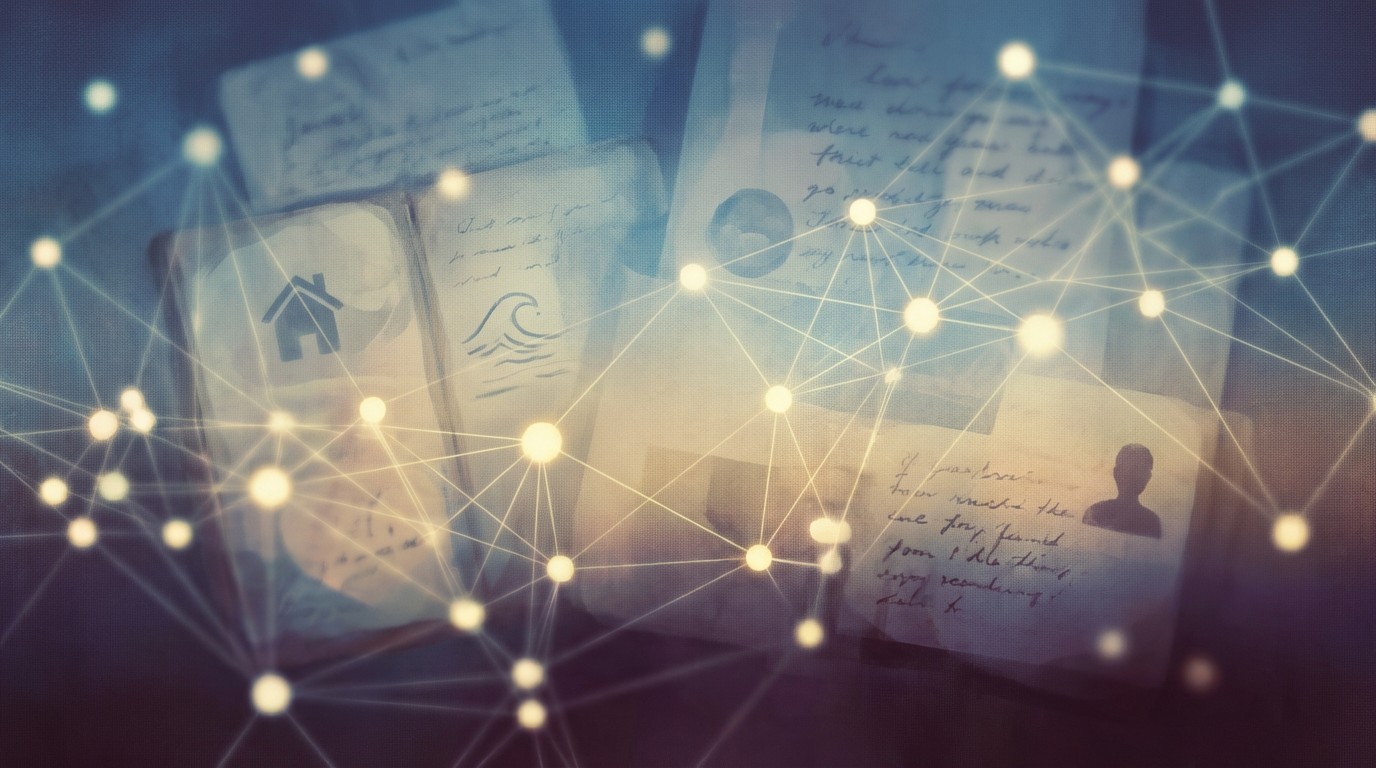
The real magic of keeping a dream journal isn't just looking back at one night. It’s what happens after a month, or a year.
Have you ever had that weird feeling of déjà vu in a dream? Like you’ve been to this specific house or met this specific person before? If your dreams are scattered across three different physical notebooks, you’ll never find the pattern.
With a digital tool, you can actually search your subconscious. Want to see every time you’ve dreamt about "water" or "flying" or that one "ex-boss" you haven't seen in years? You just type it in. You start to see the recurring characters and the weird "hidden maps" of your own mind. You aren't just filing notes; you're building a library of yourself.
Privacy: Because Dreams are Weird
Let’s face it: dreams are private. They can be embarrassing, nonsensical, or deeply personal. A physical notebook is only as safe as the drawer you hide it in.
When I was designing Epona, FaceID and encryption weren't just "features"—they were the whole point. Your dream journal should be the one place where you can be 100% unfiltered, knowing that no one—not even a curious partner or a nosy roommate—is going to stumble upon your "I was a giant talking cat" entry from Tuesday night.
Why "Epona"?
People ask why I didn't just call it "Dream Log" or something generic. In Celtic mythology, Epona is the protector of horses, but she’s also a guide for the soul.
Dreams are like wild horses—if you don't give them a place to go, they run away. I wanted to build a "stable" for those thoughts. A place that feels quiet, safe, and specifically designed for the moments between sleep and waking.
How to Start
If you want to start remembering your dreams, my advice is simple: Don't try too hard.
You don't need to write a novel. Sometimes I just put in three words: "Blue car. Angry. Rain." That’s enough to trigger the memory later. The goal isn't to be a writer; the goal is to leave a breadcrumb trail for your future self.
So, next time you wake up at 3:00 AM with a "genius" idea from the dream world, don't trust your brain to remember it. Just reach for Epona, jot down two words, and go back to sleep.
Your future self will thank you.